
Boise State’s Lasting Impact
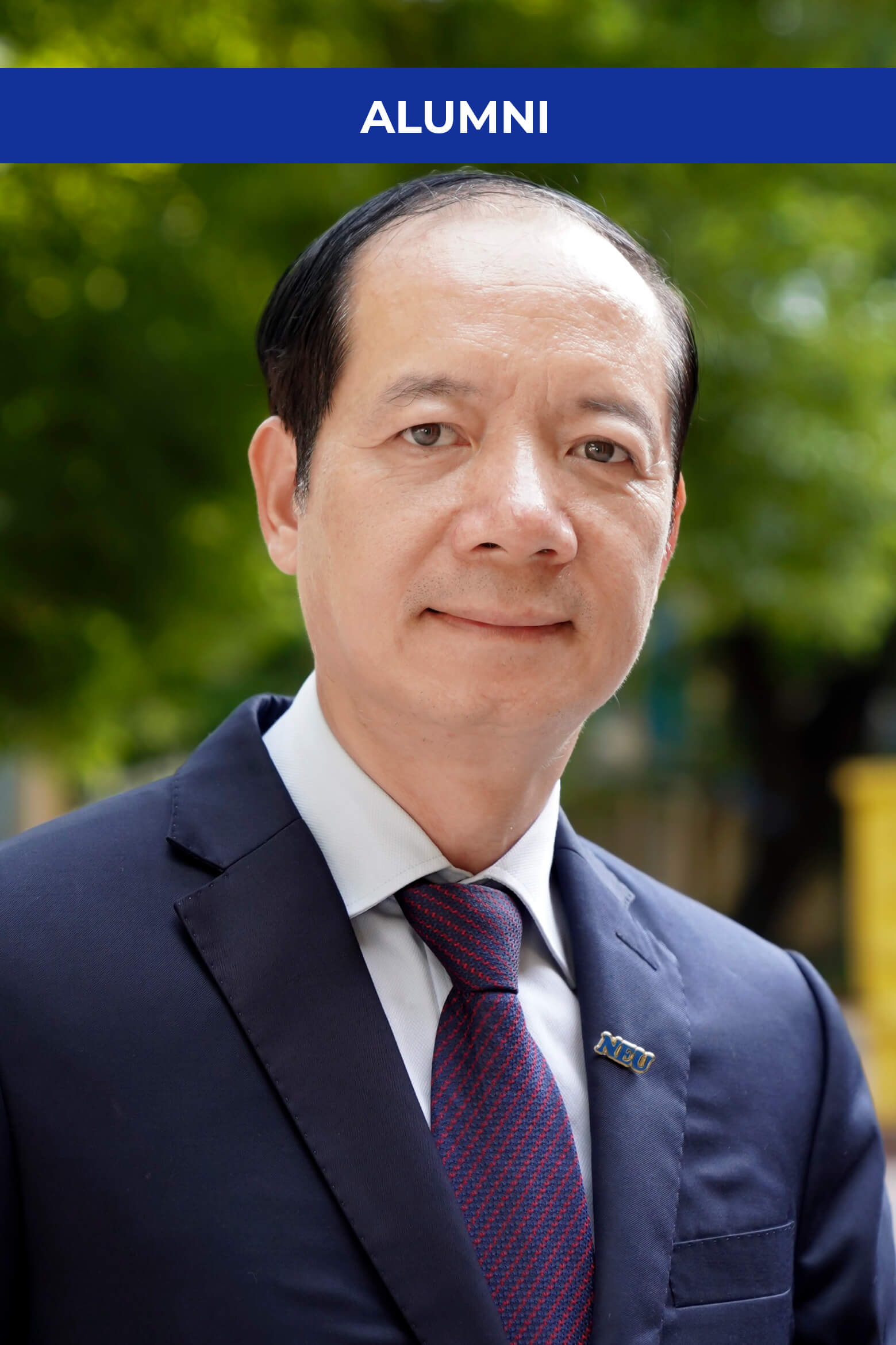
In a recent alumni spotlight for Why i Study Here, we sat down with Associate Professor, Doctor Le Trung Thanh, Dean, International School of Management and Economics, National Economics University. A proud graduate of Boise State University, Thanh shared how his time at Boise helped shape both his personal journey and the future of business education in Vietnam.
Academic Foundations at Boise State
Thanh earned his MBA from Boise State in 1995. A graduate of the very first cohort of students, the MBA was a transformative experience that set Thanh on the path to his current success. “Students from the first MBA intake program, they are very successful right now because they learn from new theory, they learn the new way of running the business,” he said. “A lot of them become the big boss in their operation.”
Delivered entirely in English, the programme was rigorous, forward-thinking and culturally immersive. A standout feature was the doctoral summer programme, which gave faculty and students the opportunity to learn from global best practices in education and management. According to Thanh, this international exposure helped elevate Vietnam’s academic standards and inspired new approaches to leadership and teaching: “Myself, I visited several universities worldwide to see, to learn how they run the business, to support the industry and also to run the school the next round.”
Bridging Cultures Through Education
Reflecting on his time at Boise, Thanh highlighted the cultural richness of the experience, saying: “that time with Boise made us familiar with American cultures and the way people work. I also had an internship in one company, so we learn how Americans run companies. That is a very meaningful time.”
Perhaps even more impactful, was the warm and supportive community at Boise. Faculty, administrators and local professionals all made a concerted effort to support international students.
“One of the key things is the staff,” Thanh said. “They are very friendly and if we have any problems they are willing to help. Even from people outside the university, from industry, they are very helpful and they give us their way of doing things and treat us like a friend to each other.”
The pivotal economic and political period in which this initial intake took place brought heightened visibility to the initiative. Boise’s strong focus on marketing allowed students to participate in real-world projects, including helping U.S. companies explore emerging markets in Asia.
Transforming Vietnam’s Business Education
Thanh credits the Boise programme with transforming the approach to business education in Vietnam. At the time, most Vietnamese universities operated under a centralised, command economy model, and were seeking to transition into a market economy like the U.S.
“In the past, when we study a Bachelor degree, the theory came from the command economy. The government do everything,” Thanh told us. “But when we study MBA, we have to change totally the way of companies running. They have to decide whatever they do. What’s the price they’re offering? It’s not like in the past when the government decided everything. So the theory we learned from the MBA program is quite new and very helpful, very appreciated for a company operating in Vietnam from that time up to now.”
This knowledge became the foundation for Vietnam’s first MBA programme, with the curriculum imported from Boise and translated into Vietnamese. Within five years, an English-language MBA programme followed. Around seven years ago, a bachelor’s degree programme, also inspired by Boise’s structure, was launched.
“We run that program in Vietnam in English as well,” Thanh explained. “So the support from Boise is not only training our lecturers but also providing us the programs, both Bachelor and Master programs, and helps us to improve our program as well.”
Continuing Partnership and Future Potential
The relationship between Vietnam and Boise State is still thriving and evolving. Thanh outlined current plans to establish a “2+2” undergraduate programme, enabling students to study two years in Vietnam followed by two years at Boise. An MBA partnership is also under active discussion. “The limitation right now is only the cost of running Boise’s MBA program is quite high, so it’s not affordable to Vietnamese students. But I think we can find the way,” Thanh said. Both institutions are exploring sustainable solutions to improve accessibility.
There are also ongoing plans to broaden the scope for staff exchange and collaborative research. Each year, delegations from Boise’s Executive MBA programme travel to Vietnam to assess market needs and explore opportunities for further collaboration.
A Lasting Educational Alliance
Thanh’s story is a powerful example of how educational diplomacy can create lasting, international impact. What began as a development aid initiative has matured into a long-standing and dynamic partnership.
While Boise State brought market economy expertise to Vietnam's emerging business landscape, Vietnamese students and faculty have enriched the American university with diverse perspectives on rapid economic transformation and cross-cultural business practices.
This dynamic exchange continues to benefit both institutions. Boise State's influence continues to ripple through universities, classrooms and communities across Vietnam, while the insights and experiences of Vietnamese students and faculty bring new perspectives, intelligence and insight for their counterparts in Idaho.
Inspired? Find out more about studying business at Boise State University here.

Manas on Studying English Literature and Finding Community at Bangor
Manas, from India, is pursuing his PhD in English Literature at Bangor University. Having completed his master’s degree in Bristol, he was d...

Rahul on Psychology, Friendship, and Finding Confidence at Bangor
Rahul, from Nepal, is studying for his BSc in Psychology at Bangor University, a place that, for him, feels like a blend of home and discove...

Laiba on Life, Learning, and the Brain at Bangor
Laiba, from Pakistan, chose to study for her Master’s in Clinical Neuropsychology at Bangor University for two simple reasons: the charm of...

Denys Arkhypenko on life, learning, and giving back at King’s College
For Denys Arkhypenko, studying in the United States began with hockey. He first came to Wilkes-Barre from Ukraine at age 11, but when it cam...